The Morning After the Gold Rush: Building on Hyped Platforms Without Getting Buried
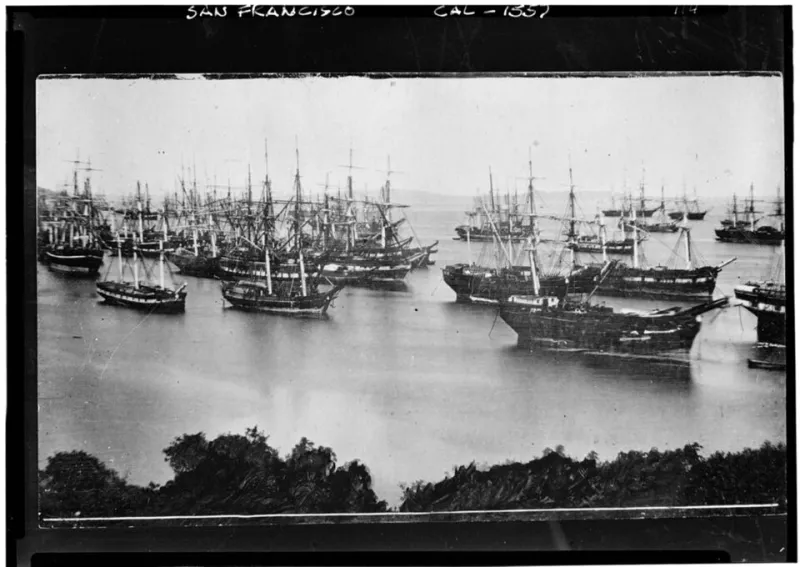
Photo: William Shew, Public domain, via Wikimedia Commons
Every technology gold rush follows the same arc. A platform opens, attention floods in, and for eighteen months the surface economy booms: agencies, tooling vendors, consultancies, and startups all building one layer up from the excitement. Then the cycle cools — the platform pivots, prices spike, or the hype simply migrates — and the layer above it is left holding inventory nobody wants.
The current AI tooling boom is only the latest iteration. And the startups building on it right now would do well to study the ones that came before, because the pattern of who survives and who doesn't is remarkably consistent.
Three Rushes, One Reckoning
The Heroku add-on era. For years, a thriving ecosystem of vendors sold logging, monitoring, and search as Heroku add-ons. When Heroku changed its partner economics and the broader market shifted toward containers and Kubernetes, dozens of those businesses found their distribution channel narrowed overnight. The survivors were the ones who had, quietly, built direct channels and multi-platform support before they needed them.
Crypto infrastructure. The 2021 wave funded an entire industry of tooling built on the assumption that speculative volume was permanent demand. When it wasn't, companies that had confused bull-market usage with product-market fit collapsed in a single quarter. The ones that endured had found at least one use case that survived the price chart.
No-code platforms. Agencies and SaaS products built atop specific no-code ecosystems have repeatedly discovered that platform pricing changes are existential events. A single revision to a pricing model can reprice an entire business built three layers up.
The AI tooling market is now writing the same story. Wrappers around a single model API enjoyed a year of extraordinary margins. As model providers moved up the stack — releasing their own assistants, agents, and enterprise features — the ground under those wrappers shifted in real time.
The Playbook for Betting Without Breaking
None of this argues against building on emerging platforms. The returns to early positioning are real. It argues for building with structural humility. Four practices separate the survivors from the cautionary tales.
1. Separate the hype demand from the durable demand. For every customer, ask: would this purchase survive a 70% drop in category enthusiasm? Write the answer down. If your revenue concentration sits in customers whose answer is no, you don't have product-market fit — you have cycle-market fit, and the cycle is a countdown.
2. Price the platform risk into your margins. If a third of your cost structure is a single API whose pricing can change unilaterally, model that change now, not after the earnings call that announces it. Build the scenario into your runway math the way coastal businesses price flood insurance.
3. Keep one abstraction between you and the wave. You don't need to support five providers on day one. But architecting so that swapping your core dependency takes weeks rather than a rewrite is the difference between a strategic pivot and a fire sale. This is the same lesson the Heroku survivors learned: portability is cheap insurance bought in calm weather.
4. Own a distribution channel the platform can't revoke. If every customer arrives through a marketplace or partner listing, your growth is rented. Start converting even a minority of customers to direct relationships — your own billing, your own login — before you need them.
What the Survivors Have in Common
Look across the wreckage of past rushes and the pattern is stark: the companies that died were rarely wrong about the technology. They were wrong about their dependence structure. They mistook a rising platform for a foundation, when it was actually a tide.
The durable builders treat hyped platforms the way experienced sailors treat wind. They use it, enthusiastically and aggressively, while it blows. But they never mistake the wind for the ocean — and they always know which direction they'd row if it stopped.
The AI boom will mint its winners the same way every rush before it did. The question worth answering today, while the sun is still out, is simple: if the hype ended tomorrow morning, how much of your business would still be standing at noon?